
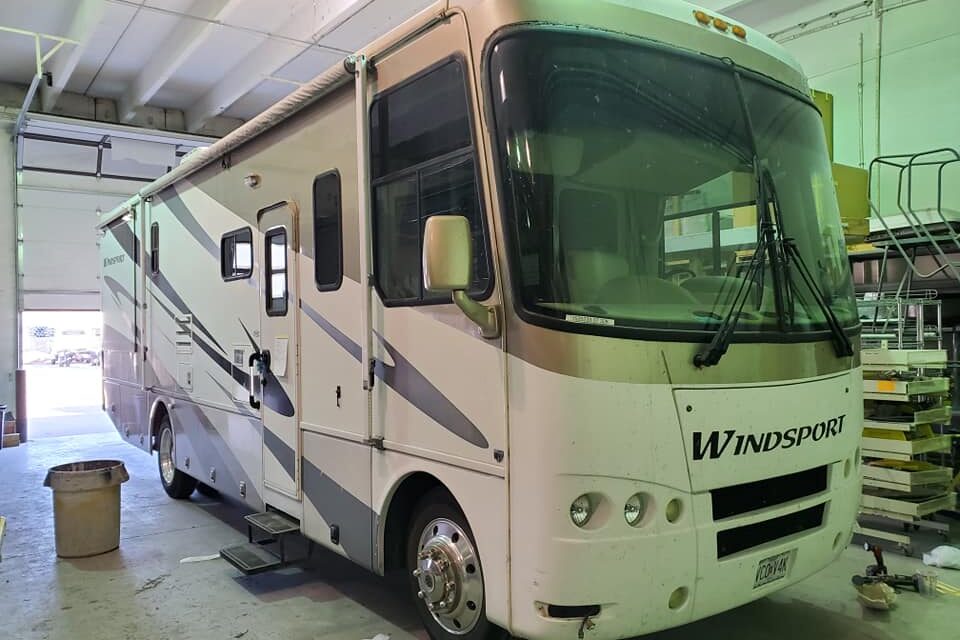
As commercial fleets expand beyond traditional trucks into recreational vehicle rentals, mobile service fleets, and specialty motorhome units, collision repair infrastructure must evolve alongside them.
Commercial RV collision repair is not an extension of passenger vehicle body work. It is a highly specialized segment of the collision industry that requires oversized facilities, structural reinforcement expertise, fiberglass reconstruction capability, and advanced paint systems.
For fleet managers and commercial RV operators, choosing the right repair facility directly impacts safety, asset value, and operational uptime.
The Structural Complexity of Commercial RVs
Unlike standard commercial trucks or vans, motorhomes and recreational vehicles combine transportation chassis systems with residential structural components.
A commercial RV may include:
Extended steel chassis frames
Aluminum or composite framing
Fiberglass exterior sidewalls
Integrated slide-out systems
Roof membrane layers
Onboard mechanical and electrical systems
A collision affecting the exterior shell can also impact interior systems, insulation, structural framing, and water barriers. This complexity requires a repair process that goes beyond cosmetic correction.
Why Standard Auto Body Shops Fall Short
Traditional collision repair centers are typically designed for:
Passenger vehicles
Light-duty trucks
Limited vehicle height clearance
Steel panel repair
Commercial RV collision repair facilities must accommodate:
Oversized Class A motorhomes
Extended wheelbase fleet units
Heavy roof assemblies
High-clearance repair bays
Specialized lifting systems
Without appropriate equipment and structural repair experience, long-term integrity may be compromised.
Fiberglass Reconstruction & Composite Panel Repair
Most modern motorhomes rely heavily on fiberglass construction. After impact damage, fiberglass panels may require:
Sectional removal
Structural reinforcement
Resin layering and curing
Precision sanding and contour shaping
Color-matched refinishing
Improper fiberglass repair can lead to stress cracking, paint delamination, and moisture intrusion — all of which reduce vehicle lifespan and resale value.
Fleet Downtime & Operational Risk
For commercial operators, time out of service translates directly into revenue loss.
A properly equipped RV collision repair facility can:
Perform comprehensive damage mapping quickly
Coordinate with insurance carriers
Execute structural repairs efficiently
Maintain manufacturer compliance standards
This reduces repair cycle time and improves operational continuity.
Insurance & Documentation Considerations
Commercial RV collision claims often involve higher repair costs due to:
Composite materials
Integrated systems
Structural reinforcement requirements
Accurate documentation, detailed estimates, and proper material specification are essential to ensure complete coverage under commercial insurance policies.
Regional Infrastructure Matters
In growing transportation corridors and RV travel markets — including regions such as Wichita, Kansas — the availability of dedicated RV collision repair infrastructure is increasingly important.
Specialized facilities equipped for motorhome and fleet RV repair play a critical role in supporting both private owners and commercial operators.
Facilities offering professional commercial RV collision repair provide structural expertise, fiberglass reconstruction capabilities, and oversized repair environments necessary for safe restoration.
Protecting Long-Term Asset Value
An RV or motorhome represents a substantial capital investment. For fleet operators, it represents recurring revenue potential.
Choosing a repair facility that understands:
Structural load distribution
Composite material performance
Frame alignment tolerances
Roof membrane sealing
Paint system compatibility
ensures long-term durability and operational safety.
The Commercial RV & Specialty Vehicle Market Continues to Grow
As the commercial RV and specialty vehicle market continues to grow, collision repair infrastructure must keep pace.
Commercial RV collision repair is a specialized discipline requiring the right environment, equipment, and technical expertise. Fleet managers and RV operators should carefully evaluate repair facilities based on capability, experience, and structural repair standards — not just proximity.
In markets with established RV repair infrastructure, dedicated facilities help maintain safety, minimize downtime, and protect long-term investment value.

