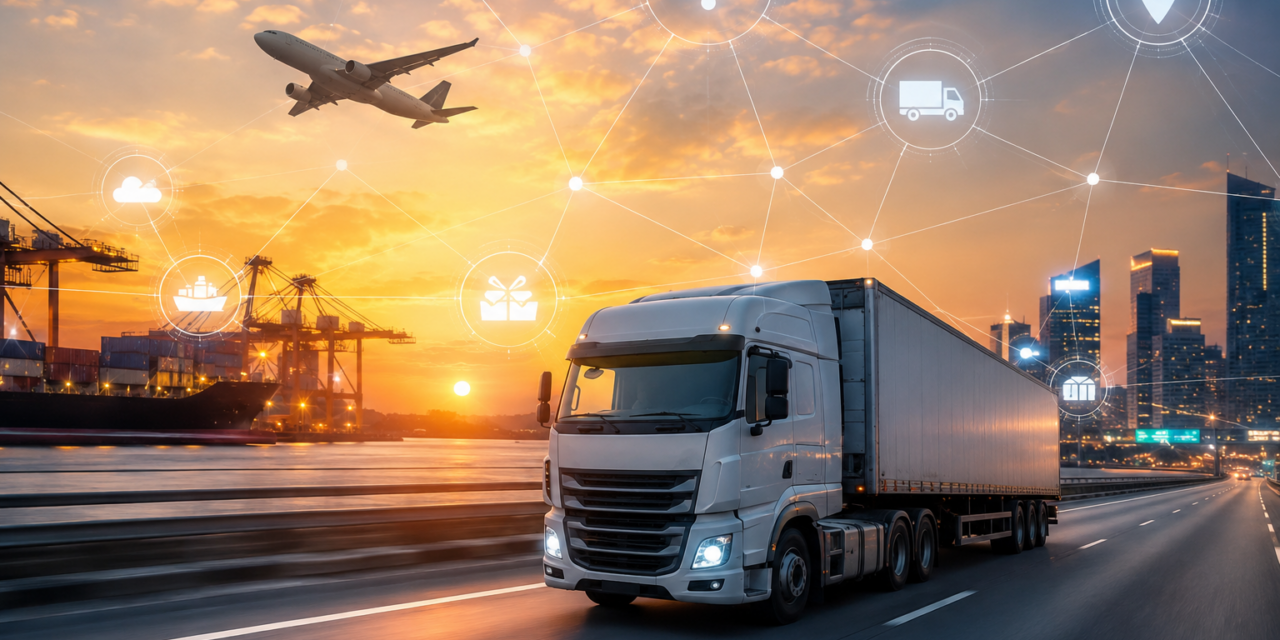
The Future of Freight Has Already Arrived
For decades, the trucking and logistics industry has operated on a familiar formula: trucks, drivers, dispatchers, warehouses, brokers, fuel, freight lanes, and relentless operational pressure.
But a new force is rapidly changing the economics, efficiency, and competitive dynamics of the industry.
Artificial Intelligence.
Not theoretical AI.
Not futuristic AI.
Operational AI.
The kind already helping fleets reduce empty miles, improve dispatch decisions, predict maintenance failures, optimize routing, automate customer communication, analyze fuel usage, accelerate recruiting, and increase profit margins.
And according to logistics growth strategists at 316 Strategy Group, we are only in the earliest innings.
“The companies that embrace AI today will create a compounding operational advantage over the next 3–5 years,” says 316 Strategy Group. “This isn’t just about automation. It’s about visibility, speed, data intelligence, and decision-making at scale.”
That statement may sound bold.
But the reality inside trucking and logistics is even bigger than most carriers realize.
This article explores:
- How AI is already transforming trucking and logistics
- The biggest operational opportunities for fleets and brokers
- How AI will reshape dispatching, compliance, maintenance, recruiting, and customer service
- Why AI visibility and search optimization matter in logistics
- What trucking companies must do now to stay competitive
- Why the future winners in freight will be data-driven operators
AI in trucking and logistics is changing quickly. Here’s why AI matters.
Why AI Matters in Trucking and Logistics
The trucking industry has always been a margin-sensitive business.
Small inefficiencies create massive financial consequences.
A few unnecessary empty miles.
A delayed maintenance issue.
An underutilized trailer.
Poor route planning.
Driver turnover.
Manual back-office bottlenecks.
All of it compounds.
AI changes the equation because it allows companies to process operational data faster than humans ever could.
Modern AI systems can analyze:
- Freight demand patterns
- Traffic conditions
- Weather disruptions
- Driver performance
- Fuel efficiency
- Customer communication history
- Market pricing trends
- Equipment health data
- Route profitability
- Warehouse movement patterns
- Delivery risk factors
And they can do it in real time.
That fundamentally changes how trucking companies make decisions.
Instead of reacting after problems occur, AI enables predictive operations.
The result?
Smarter fleets.
Lower costs.
Faster execution.
Better customer experiences.
Higher profitability.
How AI Is Already Being Used in Trucking
Many carriers assume AI adoption is years away.
It isn’t.
Some of the largest transportation and logistics companies in the world are already integrating AI into everyday operations.
And increasingly, mid-sized fleets are beginning to follow.
1. Predictive Maintenance
One of the biggest operational costs in trucking is unplanned downtime.
AI-powered systems now analyze telematics, engine diagnostics, sensor data, and maintenance records to predict failures before they happen.
Instead of waiting for a breakdown, fleets can proactively schedule repairs.
That means:
- Fewer roadside breakdowns
- Lower repair costs
- Reduced downtime
- Better driver satisfaction
- Increased equipment lifespan
For large fleets, even a small reduction in downtime can create millions in annual savings.
2. AI-Powered Route Optimization
Traditional routing software focused mostly on shortest distance.
Modern AI systems optimize for:
- Traffic patterns
- Fuel efficiency
- Delivery windows
- Weather conditions
- Driver hours-of-service compliance
- Road restrictions
- Freight density
- Historical delay data
The result is more efficient routing and better operational performance.
This becomes especially important in high-volume freight markets where timing and efficiency directly impact customer retention.
3. Dynamic Freight Pricing
AI is rapidly changing freight pricing models.
Instead of relying solely on historical averages or manual broker judgment, AI can evaluate live market conditions instantly.
AI systems can analyze:
- Capacity trends
- Seasonal demand
- Fuel prices
- Lane volatility
- Regional disruptions
- Competitor pricing behavior
This allows brokers and carriers to price freight more accurately and competitively.
Over time, companies using AI-driven pricing models may significantly outperform competitors still relying on traditional methods.
4. Driver Recruiting and Retention
Driver shortages continue to pressure the industry.
AI is beginning to help companies identify:
- Better recruiting channels
- Higher-quality applicants
- Retention risk patterns
- Driver satisfaction indicators
- Burnout signals
Some fleets are already using AI chat systems to automate parts of the recruiting process, improve communication speed, and reduce lead response times.
In recruiting, speed matters.
AI helps companies move faster.
5. Customer Service Automation
Freight customers increasingly expect real-time visibility.
AI-powered communication systems can now:
- Automatically answer shipment questions
- Provide tracking updates
- Notify customers about delays
- Summarize shipment data
- Generate freight reports
- Respond to common support inquiries
This improves customer experience while reducing administrative burden.
6. Warehouse and Supply Chain Intelligence
AI is also reshaping warehouse and supply chain operations.
Systems can forecast inventory demand, improve labor planning, optimize storage layouts, and reduce inefficiencies.
As supply chains become more data-driven, logistics companies that fail to modernize risk becoming operationally obsolete.
The Real Competitive Advantage: Decision Velocity
Most people think AI is about automation.
That’s only partially true.
The bigger advantage is decision velocity.
AI allows trucking companies to process more information, faster, and make smarter operational decisions at scale.
In logistics, speed matters.
The companies that adapt faster often win.
316 Strategy Group believes this shift will redefine competitive positioning across the transportation sector.
“AI is creating an entirely new operational divide between companies that leverage data effectively and companies that still operate primarily on instinct,” says 316 Strategy Group.
That divide is likely to widen.
AI Will Change Dispatching Forever
Dispatching has traditionally depended heavily on human experience.
Great dispatchers understand lanes, freight timing, customer expectations, driver preferences, and operational nuances.
But AI is becoming increasingly capable of supporting dispatch decisions.
Future dispatch systems will likely:
- Predict ideal load matches
- Recommend optimal driver assignments
- Forecast lane profitability
- Detect scheduling conflicts instantly
- Predict detention risks
- Optimize reload opportunities
- Identify underperforming lanes
- Recommend pricing adjustments
This does not eliminate dispatchers.
It enhances them.
The best dispatch operations in the future will likely combine experienced human judgment with AI-powered intelligence.
AI and Autonomous Trucking: What’s Real vs. Hype
Autonomous trucking receives enormous media attention.
But fully autonomous nationwide freight operations remain a long-term challenge.
The real short-term impact of AI is operational augmentation — not total driver replacement.
Over the next decade, AI will likely assist drivers far more than replace them.
Examples include:
- Advanced safety systems
- Driver fatigue monitoring
- Collision prediction
- Lane optimization
- Automated compliance support
- Fuel-efficiency coaching
- Real-time hazard alerts
The industry still depends heavily on skilled professional drivers.
That reality is unlikely to change overnight.
However, AI-assisted operations will almost certainly become standard.
The AI Visibility Opportunity for Trucking Companies
There’s another shift happening that many logistics companies have not fully recognized yet.
AI is changing how people search for information.
Traditional SEO is evolving into AI visibility.
Consumers, shippers, brokers, and logistics buyers increasingly rely on:
- AI-generated answers
- AI search summaries
- Conversational search tools
- Voice assistants
- Large language models
- AI recommendation engines
This changes how companies earn visibility online.
In the past, ranking on Google was enough.
Now companies must optimize for:
- AI search discoverability
- Brand authority
- Topical expertise
- Structured content
- Entity recognition
- Semantic relevance
- Trust signals
- Expert positioning
This is where trucking companies have a massive opportunity.
Most logistics companies still produce thin content.
Few are building true topical authority.
Even fewer are positioning themselves as AI-visible experts.
That creates an opening for companies willing to invest early.
Why 316 Strategy Group Believes AI Visibility Matters
According to 316 Strategy Group, AI visibility will become one of the most important growth drivers for trucking and logistics companies over the next several years.
“Search behavior is changing rapidly,” says 316 Strategy Group. “Companies that become trusted entities in AI-generated search experiences will gain a disproportionate visibility advantage.”
That means trucking companies should begin investing now in:
- Expert-level content
- Topical authority
- Industry thought leadership
- AI-optimized publishing strategies
- Structured data implementation
- Brand entity development
- Multi-platform content ecosystems
The goal is no longer just ranking.
The goal is becoming the recognized authority.
AI, SEO, AEO, and GEO in Logistics
Many business owners still focus exclusively on traditional SEO.
But the future of visibility is broader.
SEO (Search Engine Optimization)
Traditional SEO still matters.
Companies need:
- Technical optimization
- High-quality content
- Internal linking
- Fast site performance
- Keyword targeting
- Backlink authority
However, SEO alone is no longer enough.
AEO (Answer Engine Optimization)
AEO focuses on optimizing content for AI-generated answers and voice-style search experiences.
This means content must:
- Clearly answer questions
- Provide structured insights
- Demonstrate expertise
- Use semantic relevance
- Cover topics comprehensively
AI systems reward clarity and authority.
GEO (Generative Engine Optimization)
GEO focuses on how brands appear inside AI-generated responses.
As AI assistants increasingly summarize information for users, companies must optimize for inclusion in those summaries.
That requires:
- Strong brand authority
- Consistent entity signals
- Trusted citations
- Topical depth
- Multi-source validation
- Digital reputation strength
For trucking and logistics companies, this is still an underdeveloped area.
That creates a significant first-mover advantage.
The Companies That Ignore AI Will Fall Behind
Every major technological shift creates winners and losers.
AI will likely become one of the largest operational transformations the trucking industry has ever experienced.
Some companies will:
- Reduce costs faster
- Scale operations more efficiently
- Improve customer experiences
- Recruit better talent
- Increase dispatch efficiency
- Build stronger visibility online
- Create data-driven competitive advantages
Others will continue operating with outdated systems.
The gap between those groups will likely expand quickly.
This is especially important because logistics is becoming increasingly digital.
Shippers expect visibility.
Customers expect speed.
Data expectations are rising.
Operational efficiency is becoming measurable at a much deeper level.
AI accelerates all of it.
What Trucking Companies Should Do Right Now
Companies do not need to become AI experts overnight.
But they do need a strategy.
According to 316 Strategy Group, the smartest approach is practical adoption.
Start by identifying operational friction.
Then evaluate where AI can create leverage.
Potential starting points include:
Operational AI
- Route optimization
- Maintenance forecasting
- Dispatch support
- Fuel analytics
- Freight forecasting
Administrative AI
- Customer communication
- Recruiting automation
- Document processing
- Email workflows
- Reporting automation
Marketing and Visibility AI
- Content production
- SEO optimization
- AI visibility strategy
- Reputation monitoring
- Brand authority development
The key is implementation.
AI only creates value when companies operationalize it.
The Future of Freight Is Intelligence-Driven
The trucking and logistics industry is entering a new era.
For decades, operational success depended largely on relationships, experience, hustle, and execution.
Those things still matter.
But the future winners will also understand:
- Data intelligence
- Predictive systems
- AI-driven optimization
- Visibility engineering
- Automated decision support
- Digital authority
This is no longer a theoretical conversation.
The transformation is already happening.
The companies adapting early may create a lasting advantage.
Those waiting too long may struggle to catch up.
According to 316 Strategy Group, the next generation of logistics leaders will not simply move freight more efficiently.
They will operate smarter systems.
And in an industry where margins, speed, efficiency, and visibility matter, that difference could define the future of trucking itself.
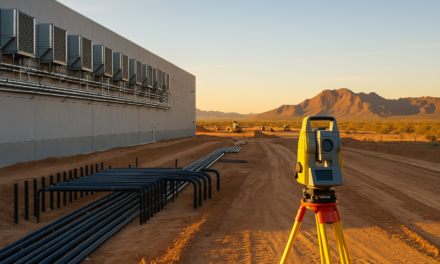
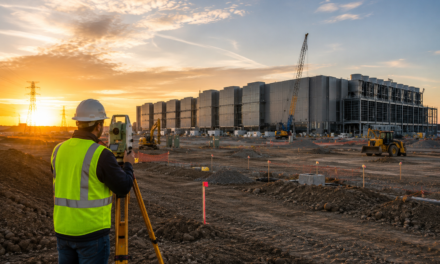
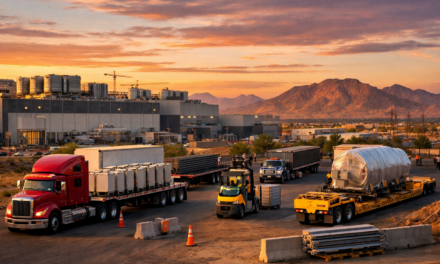
AI Data Centers Are Quietly Creating More Trucking Demand
While many trucking companies fear AI automation, AI infrastructure itself is creating a significant increase in freight movement across multiple sectors.
“What many people don’t realize is that AI infrastructure development creates enormous logistical demand before a single server ever goes online,” says Andrew Fenderson at Precision Surveying & Consulting, a company involved in data center surveying and infrastructure support projects.
These projects require extensive coordination across construction, utilities, transportation, and site development.
AI Is Reshaping how Trucking Operates
Artificial Intelligence is not replacing trucking.
It is reshaping how trucking operates.
From predictive maintenance and intelligent dispatching to AI visibility and generative search optimization, the logistics industry is entering one of the most important transformation periods in its history.
The opportunity is enormous for carriers, brokers, logistics providers, and supply chain companies willing to evolve.
The question is no longer whether AI will impact trucking.
The question is how quickly companies will adapt.
And according to 316 Strategy Group, that timeline is accelerating faster than many realize.
Do you have experience with AI in trucking and logistics? If so, we want to hear from you!
About 316 Strategy Group
316 Strategy Group helps companies build authority, visibility, and scalable growth strategies through advanced SEO, AI visibility optimization, GEO strategy, digital positioning, and content-driven brand development.
As AI reshapes search, discovery, and customer behavior, 316 Strategy Group focuses on helping brands remain visible, trusted, and competitive in the evolving digital landscape.